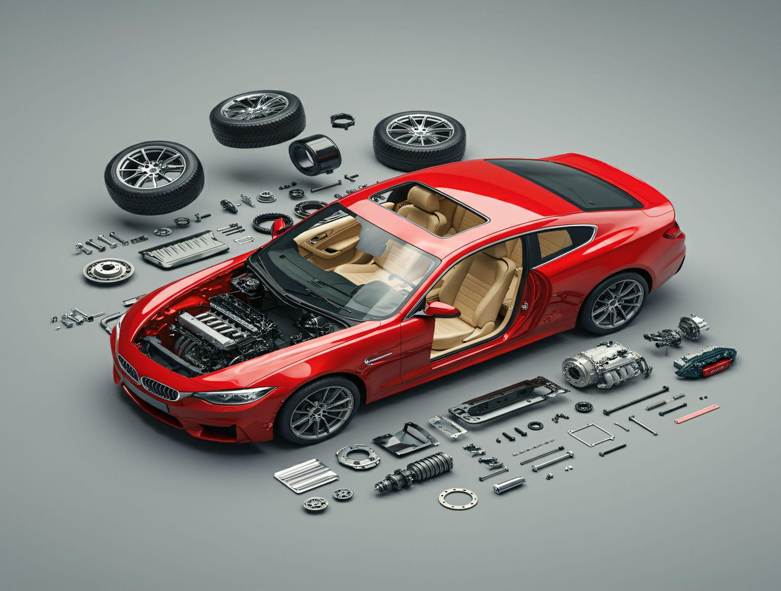
Modern vehicles contain more computing power than many people realize. While engines, transmissions, and suspension systems remain fundamental, Jeffrey Lux of Ramsey, NJ, suggests that today’s automobiles operate less like standalone mechanical machines and more like highly connected digital networks. Every time a vehicle starts, accelerates, brakes, or even adjusts the cabin temperature, hundreds of sensors and electronic control systems are quietly working together to keep everything running smoothly.
For decades, understanding a vehicle largely meant understanding its mechanical components.
- Engines generated power.
- Transmissions transferred it.
- Brakes slowed the vehicle.
- Steering systems controlled direction.
While these systems remain essential, modern automobiles have evolved into something far more sophisticated.
Today’s vehicles rely on hundreds of sensors, dozens of electronic control modules, and thousands of data exchanges every second. Instead of operating as isolated components, nearly every major system constantly shares information with the rest of the vehicle.
This invisible communication allows modern vehicles to deliver greater safety, improved efficiency, better performance, lower emissions, and a more refined driving experience than was possible only a generation ago.
Understanding how these systems interact provides valuable insight into why diagnosing modern vehicles has become increasingly complex.
Modern Vehicles Operate as Interconnected Systems
One of the biggest misconceptions about today’s automobiles is that each component functions independently.
In reality, most vehicle systems are interconnected.
Rather than making decisions alone, different components continuously exchange information before responding to changing driving conditions.
For example, when a driver presses the accelerator, multiple systems may become involved simultaneously:
- The accelerator pedal position sensor measures driver input.
- The engine control module calculates fuel and air requirements.
- The transmission control module determines appropriate gear selection.
- The traction control system evaluates wheel grip.
- The stability control system monitors vehicle balance.
- The throttle body adjusts airflow.
- Various emissions systems respond to maintain efficiency.
What feels like a simple press of the accelerator actually triggers an extensive sequence of coordinated decisions throughout the vehicle.
What Exactly Is a Sensor?
A sensor is often described as the vehicle’s ability to observe its surroundings and monitor its own condition.
Its primary function is to collect information and convert physical changes into electronic signals that computers can interpret.
Modern vehicles use sensors to measure countless operating conditions, including:
- Engine temperature.
- Air intake volume.
- Oxygen content in exhaust gases.
- Tire pressure.
- Steering angle.
- Wheel speed.
- Brake pressure.
- Fuel pressure.
- Battery condition.
- Cabin temperature.
- Rain on the windshield.
- Vehicle acceleration.
Each sensor provides only one piece of information.
Together, they create a continuously updated picture of how the vehicle is operating at any given moment.
Electronic Control Modules: The Vehicle’s Decision Makers
Collecting information is only the beginning.
Once sensor data is generated, electronic control modules, commonly called ECMs or control units, analyze that information and determine how individual systems should respond.
Rather than relying on one central computer, modern vehicles typically contain dozens of specialized control modules.
Examples include:
- Engine Control Module (ECM)
- Transmission Control Module (TCM)
- Body Control Module (BCM)
- Anti-lock Braking System (ABS) module
- Airbag Control Module
- Climate Control Module
- Power Steering Control Module
- Infotainment Module
Each module specializes in a particular area while continuously exchanging information with other modules throughout the vehicle.
This distributed approach allows systems to respond quickly while improving reliability and overall vehicle performance.
The Vehicle Network: How Everything Communicates
If sensors gather information and control modules make decisions, another question naturally follows:
How do they communicate?
Most modern vehicles use an internal communication network known as the Controller Area Network, or CAN Bus.
Rather than requiring every computer to connect directly to every other computer, the CAN Bus functions much like a shared communication highway.
Information travels across this network, allowing multiple systems to receive and respond to relevant data almost instantly.
For example:
- Wheel speed information may be shared with the braking system, transmission, stability control, and cruise control simultaneously.
- Engine speed information may be used by the transmission, dashboard instruments, emissions systems, and climate controls.
- Steering angle information helps advanced driver assistance systems understand the vehicle’s intended direction.
This constant exchange allows numerous systems to operate as one coordinated network.
Why One Problem Can Trigger Several Warning Lights
Many drivers become concerned when several dashboard warning lights appear at once.
It is easy to assume multiple components have failed simultaneously.
Often, that is not the case.
Because modern vehicle systems communicate continuously, one faulty sensor or communication problem can affect several modules at the same time.
For example, a malfunctioning wheel speed sensor may influence:
- Anti-lock braking.
- Traction control.
- Stability control.
- Adaptive cruise control.
- Tire pressure monitoring calculations.
The vehicle reports several affected systems because they all rely on the same stream of information.
Understanding these relationships explains why technicians focus on identifying root causes rather than replacing parts based solely on warning lights.
Diagnostics Has Become an Investigation
Vehicle diagnostics has changed dramatically over the past two decades.
Repairing modern automobiles increasingly resembles solving a complex systems puzzle rather than replacing visibly damaged components.
Technicians now combine:
- Scan tool analysis.
- Live sensor data.
- Manufacturer specifications.
- Electrical testing.
- Mechanical inspections.
- Software updates.
- System communication analysis.
A diagnostic trouble code provides an important clue, but it rarely identifies the complete solution.
Instead, technicians interpret the broader picture by examining how multiple systems interact.
This investigative process helps ensure repairs address the underlying issue rather than simply eliminating symptoms.
Advanced Safety Depends on Constant Communication
Many of today’s most familiar safety technologies would not exist without continuous communication between sensors and electronic systems.
Features such as:
- Automatic emergency braking.
- Lane-keeping assistance.
- Blind-spot monitoring.
- Adaptive cruise control.
- Collision avoidance systems.
- Electronic stability control.
All depend upon information gathered from numerous sensors operating simultaneously.
Radar units, cameras, steering sensors, wheel speed sensors, and braking systems continuously exchange information while sophisticated software evaluates changing driving conditions.
The result is a vehicle capable of responding to potential hazards far more quickly than mechanical systems alone ever could.
The Future Will Bring Even Greater Integration
Automotive technology continues evolving rapidly.
Electric vehicles, connected vehicle technologies, over-the-air software updates, predictive maintenance, and increasingly autonomous driving systems all rely upon even greater communication between electronic components.
Future vehicles will likely generate more operational data than ever before.
That information will help improve:
- Energy efficiency.
- Battery performance.
- Preventive maintenance.
- Driver assistance technologies.
- Safety systems.
- Vehicle reliability.
As automotive engineering advances, understanding system integration will become just as important as understanding individual mechanical components.
Modern Cars Think as Systems, Not Individual Parts
The automobile has undergone one of the most significant technological transformations in modern engineering.
While engines, transmissions, and mechanical craftsmanship remain essential, today’s vehicles succeed because hundreds of electronic components continuously work together behind the scenes.
This invisible conversation allows modern automobiles to adapt, monitor, calculate, and respond in real time, creating vehicles that are safer, more efficient, and more intelligent than ever before.
For drivers, much of this communication remains unseen. Yet every smooth gear change, stable turn, efficient engine adjustment, and advanced safety response reflects an extraordinary level of coordination occurring within milliseconds. Understanding these interconnected systems offers a deeper appreciation for how modern vehicles operate and why automotive technology increasingly depends not only on mechanical expertise but also on understanding the sophisticated digital networks that quietly power every journey.